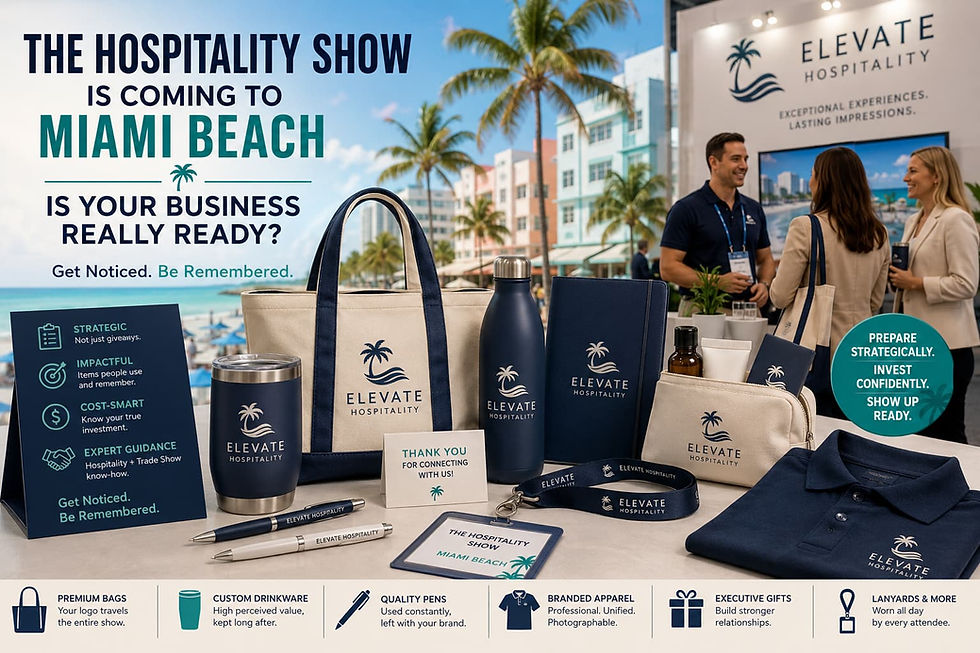
Apartment Resident Welcome Gifts: What Property Managers Should Put in a Move-In Kit

Moving into a new apartment is rarely a calm experience. Residents may be carrying boxes, coordinating movers, figuring out parking, trying to remember where they packed the coffee maker, setting up utilities, and learning an unfamiliar property all at the same time.
That makes move-in day one of the most important early moments in the resident relationship.
A thoughtful welcome gift will not determine whether someone renews a lease two years later, but it can immediately communicate that the property pays attention to details. More importantly, the right move-in kit can actually help the resident settle in instead of simply giving them another object carrying the apartment-community logo.
For property managers, developers, and multifamily groups, the strongest resident welcome programs start with a practical question: What would be genuinely useful during the first few days of living here? If you are planning a move-in program, Florida Custom Merch can help narrow branded merchandise around the residents, property, quantities, budget, and recurring move-in schedule.

Start With the Move-In Experience, Not the Merchandise Catalog
A resident welcome kit should solve small first-day needs or reinforce something distinctive about the community.
That usually means thinking about what residents are doing immediately after receiving their keys. They may be carrying items between the parking area and apartment, exploring amenities, walking a dog, heading to the pool, trying to locate the mail room, or realizing that they forgot something simple during the move.
Those behaviors suggest better merchandise than beginning with a generic list of promotional products.
A reusable tote can help carry things from the leasing office or car. A quality insulated bottle may be useful immediately at a Florida property with a pool, gym, walking paths, or outdoor amenities. A small household item may make sense if it solves an everyday need. A practical pouch, key-related accessory, or compact organizer can also fit naturally into the move-in process.
The point is not that every apartment community needs those exact products. The point is that the merchandise should make sense because of how residents actually live there.
The Property Itself Should Influence the Kit
A downtown luxury tower and a suburban family-oriented apartment community should not necessarily give new residents the same welcome package.
The resident profile, amenities, price point, architecture, neighborhood, and overall positioning of the property should influence the merchandise.
A coastal Florida apartment community might lean toward hydration, pool, outdoor, or beach-related items. A property centered around fitness and wellness may have opportunities connected to the gym or active lifestyle. A pet-friendly community may incorporate a useful pet item for households that have registered animals. A luxury property may choose fewer pieces at a higher quality level and use more restrained branding.
Build-to-rent communities may have yet another opportunity because the resident is moving into something that feels more like a private home. The merchandise can reflect household life rather than apartment-building life.
The stronger the connection to the community, the less the gift feels like generic property-management swag.
Useful Household Products Can Outperform Traditional Giveaways
Property-management merchandise lives in an unusual environment: the recipient is literally carrying it into their home.
That should raise the standard.
A novelty product that might survive at a trade-show booth can feel misplaced in a residential welcome kit. The resident already has limited patience for additional clutter while unpacking.
Products that earn space in the home are much more valuable.
That might include quality drinkware, kitchen-related items, small organization products, useful tech accessories, a good tote, compact household tools, or something related to the property's amenities. The exact choice depends on budget and audience, but the test should remain the same: Would a resident realistically continue using this after the boxes are gone?
If the answer is no, it probably does not belong in the kit.
Branding Should Not Make the Apartment Feel Like an Advertisement
There is a difference between reminding residents where the gift came from and covering their home in property logos.
A large apartment-community logo may be perfectly appropriate on a tote carried around the property, but less attractive on something that sits permanently in the resident's kitchen or living room.
Subtle branding often works better for home-use products.
A small engraved logo, understated imprint, tasteful color treatment, or branding concentrated on packaging can keep the property recognizable without reducing the likelihood that the resident actually uses the product.
This becomes especially important at upscale communities. If management is investing in premium merchandise, oversized promotional branding can work against the very quality impression the product was intended to create.
The item should still look desirable when it leaves the leasing office.
The Welcome Kit Can Also Introduce the Property
Merchandise is only one part of the move-in package.
The kit can help residents understand where they now live.
A simple printed card or small welcome guide can point residents toward the pool, fitness center, clubhouse, package room, dog park, trash procedures, maintenance contact, resident portal, Wi-Fi information, or nearby amenities. A QR code can direct them to digital resident resources without turning the kit into a thick packet of paperwork.
That information can be integrated cleanly into the presentation rather than handed over as a separate administrative pile.
For a new resident, convenience matters more than marketing language.
A card that answers three questions they would otherwise have to call the leasing office about may create more value than another decorative insert describing the community as “luxury living reimagined.”
Use the welcome kit to make the property easier to live in.
Local Items Can Help Create a Sense of Place
Many residents are not simply changing apartments. They may be relocating to a new neighborhood, city, or state.
That creates an opportunity to include something local.
A neighborhood guide, local café partnership, small item from a nearby business, map of walkable destinations, or other location-specific component can help the resident begin connecting to the area beyond the property gates.
For communities trying to position themselves around lifestyle rather than square footage alone, this can be especially useful.
A Florida property near the beach might include information about beach access or local recreation. An urban community might highlight nearby restaurants, transit, or neighborhood businesses. A family-oriented suburban property may focus on parks, recreation, and community resources.
The merchandise and local content can work together to say, “Welcome to this place,” not simply, “Welcome to this building.”
Not Every Household Has to Receive Exactly the Same Kit
A standard core kit creates consistency, but selective variations can make the program more useful.
A household with a registered dog could receive a pet-related item. A family moving into a larger unit may have different needs from a single professional moving into a studio. A furnished corporate apartment may serve a completely different resident profile from a conventional twelve-month lease.
The program does not need dozens of versions.
Even one or two optional components can create a more relevant experience when the property already knows something useful about the resident.
This can also help communities with VIP, corporate, referral, or premium-unit residents who may justify an elevated version of the welcome package.
The important thing is to design those variations intentionally instead of allowing individual leasing agents to invent them at random.
A Move-In Kit Is a Recurring Program, Not a One-Time Event Order
This is one of the biggest operational differences between resident gifts and event merchandise.
Move-ins keep happening.
A property may welcome five residents this week, twelve next month, and thirty during a heavy leasing period. A new development in lease-up may need hundreds of kits over several months rather than one large distribution day.
That means reorderability matters.
Choose products that are likely to remain available. Keep approved artwork and decoration specifications. Know the reorder minimum. Track how many kits are being used. Decide where inventory will be stored and who is responsible for replenishment.
A wonderful welcome kit that disappears after the first forty move-ins because nobody reordered it is not really a resident program.
The system needs to work after the launch excitement is gone.
Lease-Up Properties Need a Different Inventory Strategy
A newly opened apartment community can move through welcome merchandise very quickly.
Early leasing projections may also change. A property may lease faster than expected, slower than expected, or in waves tied to construction completion.
Ordering too little can leave later residents with a noticeably weaker welcome experience. Ordering far too much can tie up budget and storage space before management knows whether the chosen products are working.
A staged approach can make sense.
Establish the core merchandise and branding, order enough inventory for the initial leasing period, and then replenish based on actual move-in volume. Where supplier minimums and production economics allow, this reduces the risk of buying a year's worth of a product before the property has any resident feedback.
The first order is partly a program launch and partly a real-world test.
Multi-Property Groups Should Standardize the Right Things
Property-management companies with several communities have a familiar challenge.
Corporate wants consistency. Individual properties want something that fits their own residents and local identity.
Both can be right.
A management company might standardize overall quality, approved branding, purchasing process, budget ranges, and perhaps one or two core products. Individual communities can then add a locally relevant item or choose among several approved options.
That prevents every property from independently searching for merchandise while still avoiding a completely generic corporate package.
It also makes reordering easier.
Corporate can maintain specifications and supplier relationships while property teams focus on the resident experience.
Presentation Should Feel Prepared, Not Expensive
A resident welcome kit does not need luxury packaging to feel intentional.
The products can be placed neatly inside a reusable tote, simple box, or other practical container. A welcome card can sit on top. Property information can be organized rather than scattered. The keys or access materials may even be integrated into the handoff if the property workflow allows it.
The difference is preparation.
Receiving several loose promotional items from behind the leasing desk feels very different from receiving the same products assembled as a deliberate move-in package.
That presentation tells the resident that this is something the property does consistently, not something the leasing agent happened to find in a storage closet.
Ask the Leasing Team What Residents Actually Use
Property managers do not have to guess forever.
Leasing agents, maintenance teams, concierge staff, and resident-service teams hear resident feedback constantly.
Ask them what new residents request during the first week. Ask which items residents carry around the property. Ask whether people use the current welcome gift or leave it behind. Ask what questions are repeated at move-in.
Those conversations can reveal better merchandise opportunities.
If every resident asks where to refill a water bottle, that tells you something. If dog owners repeatedly need a certain convenience, that tells you something. If the current gift has been sitting untouched in the same apartment when maintenance enters months later, that tells you something too.
A recurring welcome program should improve over time.
The Goal Is Not More Stuff. It Is a Better Arrival.
Residents do not need another box of promotional products on moving day.
They need an easier transition into their new home.
The best welcome merchandise supports that transition with items that are useful, appropriate to the property, thoughtfully branded, and simple enough for management to replenish consistently.
If your property, development, or management group is planning a new resident program, Florida Custom Merch can help you build the merchandise portion around the community, move-in volume, budget, branding, and recurring inventory needs.
The strongest move-in gift does not simply say the property remembered to order merchandise.
It says something much more valuable:
We were ready for you to live here.